
June is Scoliosis Awareness Month
- Created in Newsletter Library
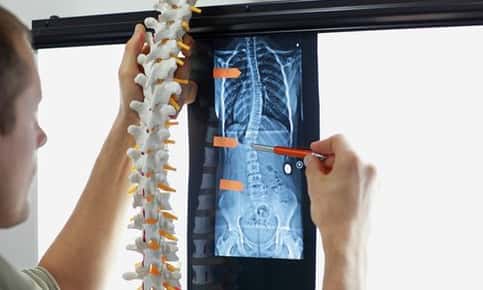
A Guide to Scoliosis: Treatment, Symptoms, and Causes
Scoliosis occurs when the spine curves sideways. Although you may associate the condition with teenagers, it can affect adults too. An estimated 7 million people in the United States have scoliosis, according to the National Scoliosis Foundation.
Scoliosis Symptoms
The bony vertebrae that make up your spine normally form a straight line from the bottom of your back to the top of your neck. If you have scoliosis, your spine curves to the side, forming an "S" or "C" shape.
Scoliosis symptoms vary depending on the degree of curvature and may include:
- Pain in the back, neck, shoulders, hips, or ribs
- Uneven hips, shoulders, shoulder blades, or waist
- Muscle spasms
If the curvature progresses, the vertebrae may begin to press on nerves and organs, causing difficulty breathing, heart issues, or constipation. Limited mobility and physical deformity may also occur.
Scoliosis in Children
Scoliosis usually becomes apparent during growth spurts in the pre-teen and teenage years. Fortunately, most children who develop scoliosis only have mild curvatures and may never need treatment. It's not always possible to determine the cause of scoliosis. The condition may be more likely to occur after an injury that affects the spine or if your child has muscular dystrophy or cerebral palsy.
A scoliosis diagnosis can be a surprise to both parents and children. The condition is often detected during annual wellness exams or scoliosis screenings at school.
Your child's doctor may not recommend treatment unless the curve progresses beyond 30 degrees. If your child has been diagnosed with scoliosis, their spine will be X-rayed periodically. One or more of these treatments may be needed if the curvature continues to progress:
- Physical Therapy: Physical therapy exercises strengthen the muscles that support the back and improve flexibility.
- A Brace: Wearing a back brace while your child is still growing can stop the curvature from growing worse in some cases. Braces are worn under clothing for up to 23 hours per day, depending on the type.
Scoliosis in Adults
Scoliosis that begins during childhood can continue to affect you during adulthood. You may experience minor worsening of your curvature as you grow older, which can trigger or worsen back pain, stiffness, and muscle cramps. Numbness in the legs may be a problem if a nerve becomes pinched.
You might develop scoliosis for the first time as an adult if the discs that cushion your spine begin to break down or you develop arthritis or spinal stenosis. Spinal stenosis occurs due to the narrowing of the spinal canal that protects your spinal cord. Adult scoliosis can cause pain or numbness in your back and legs. Some treatment options include chiropractic, physical therapy, and short-term use of braces.
How Chiropractic Treatment Can Help
Chiropractic treatment may help ease scoliosis-related pain in both children and adults. When vertebrae become misaligned, they can press on nerves, causing pain. Muscle tension and spasms may also occur if your spine isn't properly aligned. Regular chiropractic treatments improve spinal alignment and may also decrease inflammation, improve nerve function, and increase flexibility and range of motion.
Twenty-eight adult scoliosis patients saw improvements in disability, pain, and Cobb angle in a study that appeared in the Journal of Chiropractic Medicine in 2011. Cobb angle is used to determine the degree of side-to-side curvature. The patients completed a six-month exercise-based chiropractic program that began after the clinical part of their treatment was over.
Chiropractic treatment offers a simple, natural way to help you manage your scoliosis symptoms.
Sources:
Health Resources

The following resources have been assembled to provide you with more chiropractic wellness care information available on the internet.

American Chiropractic Association
www.amerchiro.org
Palmer University
www.palmer.edu
Foundation for Chiropractic and Education Research
www.fcer.org
Children’s Chiropractic Research Foundation
www.icpa4kids.org
Journal for Vertebral Subluxation Research
www.jvsr.com
International Chiropractors Association
www.chiropractic.org
Chiropractic Resource Organization
www.chiro.org
Chiropractic Online Today
www.chiro-online.com
Chiroweb.com
www.chiroweb.com
World Federation of Chiropractic
www.wfc.org
The Association of Chiropractic Colleges
www.chirocolleges.org
World Chiropractic Alliance
www.worldchiropracticalliance.org
Today’s Chiropractic Magazine
www.todayschiropractic.com
National University of Health Sciences
www.nuhs.edu
Life College of Chiropractic
www.life.edu
New York College of Chiropractic
www.nycc.edu